


Telemedicine has emerged as a revolutionary approach in healthcare, leveraging digital technologies to provide remote medical consultations and services. This shift has not only transformed the patient - doctor relationship but also necessitated the integration of various medical devices to ensure accurate diagnosis and effective treatment. Among these devices, the medical laser printer plays a crucial and often under - appreciated role. As a medical laser printer supplier, I am well - positioned to shed light on the functions and significance of these printers in the realm of telemedicine.
Enhancing Visual Communication
One of the primary functions of a medical laser printer in telemedicine is to print high - quality medical images. In telemedicine scenarios, healthcare providers often rely on images such as X - rays, MRIs, CT scans, and ultrasound images to diagnose patients. The clarity and precision provided by a medical laser printer are paramount. These printers are designed to accurately reproduce fine details, color nuances, and high - contrast images. For example, in an MRI scan, a clear and detailed print can help doctors identify subtle abnormalities such as tumors or lesions that may not be as apparent on a digital screen.
When a patient undergoes an imaging procedure at a remote location, the images are transmitted digitally to a specialist. While digital viewing is convenient, having a hard - copy printed on a medical laser printer allows the doctor to make annotations, compare images over time, and refer to them during face - to - face discussions with the patient. This hard - copy record can also be included in the patient's medical file for long - term storage and reference.
Ensuring Regulatory Compliance
Medical records, including printed images, are subject to strict regulations and standards. A medical laser printer helps ensure compliance with these regulations. For instance, in many countries, the Health Insurance Portability and Accountability Act (HIPAA) in the United States sets guidelines for the privacy and security of patient information. A high - quality laser printer can print patient - specific information such as names, dates of birth, and medical record numbers clearly and securely. The printers are also capable of maintaining the integrity of the images, which is necessary for legal and audit purposes.
Moreover, the medical industry has specific requirements for image quality and consistency. Medical laser printers are calibrated to meet these standards, ensuring that the printed images are reliable and accurate for medical decision - making. This calibration is particularly important in telemedicine, where doctors may not be present during the imaging procedure and are relying solely on the printed or digital images for diagnosis.
Facilitating Second Opinions
Telemedicine has made it easier for patients to seek second opinions from specialists around the world. A medical laser printer can play a vital role in this process. When a patient requests a second opinion, the referring doctor can print the relevant medical images using a laser printer and either mail them or share high - resolution digital scans of the printed images with the consulting specialist.
The printed images can provide a more tangible and detailed view of the patient's condition compared to digital images alone. Specialists can study the prints at their own pace, make notes directly on the images, and discuss the case with colleagues in a more collaborative manner. This ability to share high - quality printed images enhances the accuracy of the second - opinion process and ultimately benefits the patient by providing more comprehensive and informed diagnoses.
Complementary to Other Medical Devices
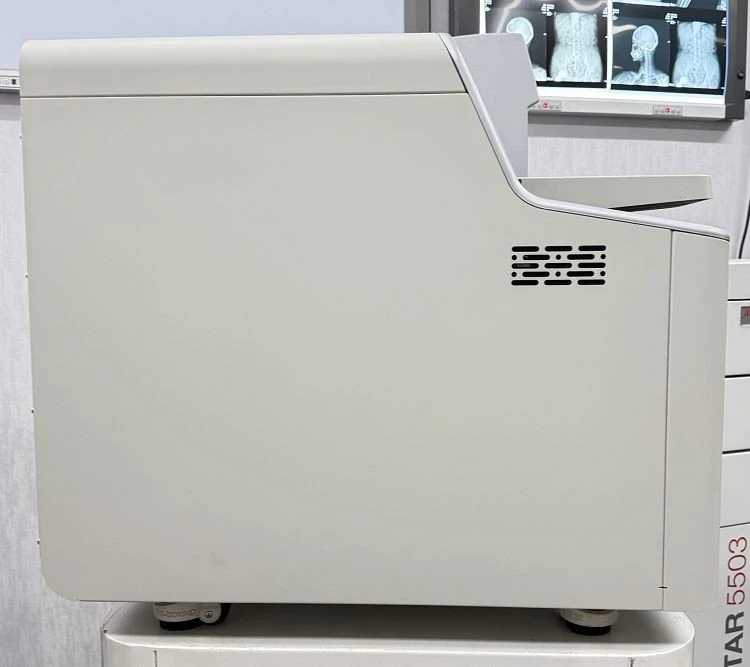
Medical laser printers are often used in conjunction with other medical devices in a telemedicine setup. For example, a Medical Thermal Imager is used to detect and visualize temperature variations in the body, which can be indicative of various medical conditions. The data and images collected by the thermal imager can be printed using a medical laser printer for further analysis.
Similarly, Dry Thermal Printers are another type of printer used in medical settings. While dry thermal printers are known for their speed and simplicity, medical laser printers offer superior image quality, especially for complex medical images. In some cases, both types of printers may be used in a telemedicine facility depending on the specific needs of the patient and the type of medical procedure.
MRI Printers are specifically designed to print high - resolution MRI images. These printers work in harmony with the advanced imaging capabilities of MRI machines. A medical laser printer can achieve the same high - level of precision and detail as an MRI printer, making it a versatile option for printing MRI images in a telemedicine context.

Cost - Efficiency and Long - Term Viability
In a telemedicine practice, cost - efficiency is a crucial consideration. Medical laser printers, although initially more expensive than some other types of printers, offer long - term cost benefits. These printers have a high lifespan and require less maintenance compared to other printing technologies. The cost of printing supplies such as toners is relatively stable, and the high - quality prints mean that there is less need for reprinting due to poor image quality.
Additionally, the reliability of medical laser printers reduces the risk of errors in patient diagnosis. Inaccurate or low - quality prints can lead to misdiagnosis, which can be costly in terms of patient health and potential legal consequences. By investing in a high - quality medical laser printer, telemedicine providers can ensure reliable and accurate patient care, which is essential for the long - term success of the practice.
Contact for Procurement
If you are involved in a telemedicine practice or looking to enhance your existing medical imaging capabilities, I encourage you to explore our range of medical laser printers. We have a team of experts ready to assist you in finding the right printer to meet your specific needs. Whether you require a printer for high - volume printing of MRI images or a more compact solution for a small - scale telemedicine clinic, we have the products and knowledge to support you. Contact us to start a discussion about how our medical laser printers can transform your telemedicine practice.
References
- American Telemedicine Association. (2023). Telemedicine Best Practices.
- Healthcare Information and Management Systems Society (HIMSS). (2023). Digital Healthcare Infrastructure.
- International Electrotechnical Commission (IEC). (2022). Medical Imaging Equipment Standards.