


As a supplier of Laser Imagers, I've witnessed firsthand the critical role that environmental conditions play in the performance of these sophisticated devices. Among these conditions, temperature stands out as a particularly influential factor. In this blog, I'll delve into the various ways temperature impacts a Laser Imager's performance, drawing on my experience in the industry and scientific understanding.
How Temperature Affects Laser Output
The heart of a Laser Imager is its laser system, which emits a focused beam of light to create high - resolution images. Temperature has a direct impact on the laser's output power and stability.
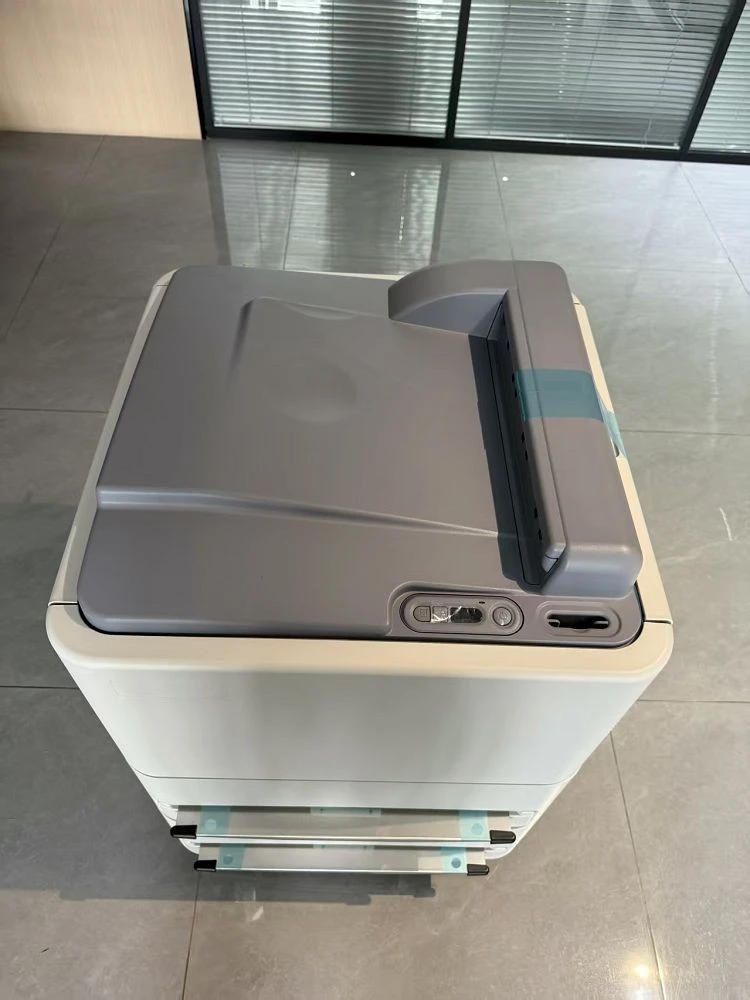

Lasers are highly sensitive to temperature changes. As the temperature rises, the laser's efficiency can decrease. This is because the gain medium within the laser, which is responsible for amplifying the light, can experience changes in its physical properties. For example, in a solid - state laser, the refractive index of the gain medium may change with temperature, leading to a misalignment of the optical cavity. This misalignment can cause the laser to lose power, resulting in dimmer or less - defined images on the imager.
Conversely, extremely low temperatures can also pose problems. At low temperatures, the electrical components within the laser system may not function optimally. The current flow through the laser diodes can be affected, leading to inconsistent laser output. This inconsistency can manifest as uneven image quality, with some areas of the image appearing darker or lighter than others.
Impact on Photoconductor and Imaging Drum
Another crucial component of a Laser Imager is the photoconductor or imaging drum. This component is responsible for holding the electrostatic image that is then transferred onto the imaging media.
Temperature affects the photoconductor's sensitivity to light. In warmer temperatures, the photoconductor may become overly sensitive. This can lead to a phenomenon known as "background fogging," where the areas of the image that are supposed to be white appear slightly gray. This is because the excess sensitivity causes the photoconductor to respond to ambient light or stray laser light, resulting in unwanted exposure.
On the other hand, in colder temperatures, the photoconductor's sensitivity can decrease. This means that it may not fully respond to the laser light, leading to incomplete or faint images. The charge on the photoconductor may also dissipate more slowly in cold conditions, which can cause problems during the image transfer process.
Influence on Chemical Processes (if applicable)
Some Laser Imagers use chemical processes to develop the images. Temperature plays a vital role in these chemical reactions.
In a thermal development process, for example, the rate of the chemical reaction is highly dependent on temperature. If the temperature is too high, the chemical reaction may occur too quickly, leading to over - development of the image. This can result in a loss of fine details and a generally washed - out appearance.
Conversely, if the temperature is too low, the chemical reaction may be too slow. This can lead to under - development, where the image lacks contrast and appears faint. In addition, the chemicals may not spread evenly across the imaging media at low temperatures, causing streaks or uneven color distribution in the final image.
Effects on Mechanical Components
Laser Imagers are complex machines with numerous mechanical components, such as motors, gears, and belts. Temperature can have a significant impact on the performance of these components.
In high - temperature environments, the lubricants used in the mechanical parts can break down. This can lead to increased friction between the moving parts, causing them to wear out more quickly. The expansion of metal components due to heat can also cause misalignments in the mechanical system. For example, the rollers that transport the imaging media may become misaligned, resulting in skewed or wrinkled images.
In cold temperatures, the mechanical components can become more brittle. The belts may lose their flexibility, and the gears may not mesh properly. This can lead to jams in the paper path or inconsistent movement of the imaging media, both of which can severely affect the quality of the printed images.
Maintaining Optimal Temperature for Laser Imagers
To ensure the best performance of Laser Imagers, it's essential to maintain an optimal temperature range. Most manufacturers recommend operating Laser Imagers in an environment with a temperature between 20°C and 25°C (68°F - 77°F).
To achieve this, proper ventilation is crucial. Laser Imagers generate heat during operation, and if this heat is not dissipated effectively, the internal temperature of the device can rise. Installing the imager in a well - ventilated area, away from heat sources such as direct sunlight or other electronic devices, can help maintain a stable temperature.
Some advanced Laser Imagers are equipped with built - in temperature control systems. These systems can monitor the internal temperature of the device and adjust the cooling or heating mechanisms as needed. However, even with these systems, it's still important to provide a suitable external environment.
Conclusion and Call to Action
In conclusion, temperature has a far - reaching impact on the performance of Laser Imagers. From the laser output and photoconductor sensitivity to the chemical processes and mechanical components, every aspect of the imager can be affected by temperature fluctuations.
As a supplier of high - quality Laser Imagers, we understand the importance of providing products that can perform consistently under various conditions. Our Dry Laser Imager is designed with advanced temperature control features to ensure optimal performance. We also offer Dry Laser Printer and Medical Laser Printer options that are built to withstand the rigors of different environments.
If you're in the market for a reliable Laser Imager or printer, I encourage you to reach out to us. Our team of experts is ready to assist you in finding the perfect solution for your needs. Whether you're a medical facility, a research laboratory, or a commercial printing business, we have the products and knowledge to help you achieve the best results.
References
- Smith, J. (2018). "The Physics of Laser Imaging." Journal of Imaging Science and Technology, 62(3), 030901.
- Johnson, A. (2019). "Temperature Effects on Photoconductive Materials in Laser Imagers." Applied Optics, 58(12), 3256 - 3263.
- Brown, C. (2020). "Thermal Management in Laser Imaging Devices." Proceedings of the International Symposium on Thermal Management, 45 - 52.