


As a supplier of Medical Laser Printers, I am often asked about how these sophisticated devices work. In this blog post, I will delve into the intricate mechanisms behind medical laser printers, shedding light on their technology, functionality, and the benefits they offer in the medical field.
The Basics of Medical Laser Printing
Medical laser printers are specialized devices used to produce high - quality images from digital medical data. These images can include X - rays, CT scans, MRIs, and ultrasound images. The primary goal of a medical laser printer is to accurately reproduce the detailed information contained in these digital images onto a physical medium, typically photographic film or paper.
The process of medical laser printing can be divided into several key stages: data input, image processing, laser exposure, and development.
Data Input
The first step in the medical laser printing process is data input. Medical imaging devices such as X - ray machines, CT scanners, and MRIs generate digital images in specific formats. These images are then transferred to the medical laser printer, usually through a network connection. The printer is designed to receive and interpret various image file formats commonly used in the medical field, such as DICOM (Digital Imaging and Communications in Medicine). DICOM is a standard protocol that ensures the seamless transfer and compatibility of medical images between different devices and systems.
Once the printer receives the digital image data, it stores the information in its internal memory. This allows the printer to process the data at its own pace and ensures that the image is not lost in case of a temporary network interruption.
Image Processing
After the data is input, the medical laser printer begins the image processing stage. This is a crucial step where the printer analyzes and enhances the digital image to optimize its quality for printing. The printer uses advanced algorithms to adjust parameters such as contrast, brightness, and sharpness. These adjustments are made based on the specific requirements of the medical image and the characteristics of the printing medium.
For example, in an X - ray image, the printer may enhance the contrast to better distinguish between different tissues and structures. In an MRI image, it may adjust the brightness to highlight specific anatomical features. The image processing algorithms also take into account the resolution of the original image and the capabilities of the printer to ensure that the final printed image has the highest possible quality.
Laser Exposure
The heart of the medical laser printer lies in the laser exposure stage. This is where the digital image is physically transferred onto the printing medium. The printer uses a high - intensity laser beam to expose the photosensitive surface of the film or paper.
The laser beam is controlled by a series of mirrors and lenses that direct it across the surface of the printing medium in a precise pattern. As the laser beam moves, it varies in intensity according to the pixel values of the digital image. Areas of the image that are supposed to be darker receive more laser exposure, while lighter areas receive less exposure.
For instance, if a particular pixel in the digital image represents a dense bone structure, the laser will emit a high - intensity beam to expose that area of the film or paper more, resulting in a darker spot on the printed image. Conversely, for a pixel representing a less dense tissue, the laser will emit a lower - intensity beam, creating a lighter spot.
There are different types of lasers used in medical laser printers, such as helium - neon lasers and semiconductor lasers. Each type has its own advantages in terms of power, precision, and reliability.
Development
After the laser exposure, the printing medium goes through the development stage. This is where the latent image created by the laser exposure is made visible. The development process typically involves three main steps: developing, fixing, and washing.
In the developing step, the exposed film or paper is immersed in a developer solution. The developer contains chemicals that react with the exposed silver halide crystals in the photosensitive layer of the medium. This reaction causes the exposed crystals to turn into metallic silver, forming the visible image.
The fixing step follows the developing step. In this step, the medium is placed in a fixer solution. The fixer removes the unexposed silver halide crystals from the medium, making the image permanent and preventing further exposure to light.
Finally, the medium is washed thoroughly to remove any remaining chemicals from the development and fixing processes. This ensures that the printed image is stable and will not deteriorate over time.

Types of Medical Laser Printers
There are different types of medical laser printers available in the market, each with its own unique features and applications.
Dry Laser Printers
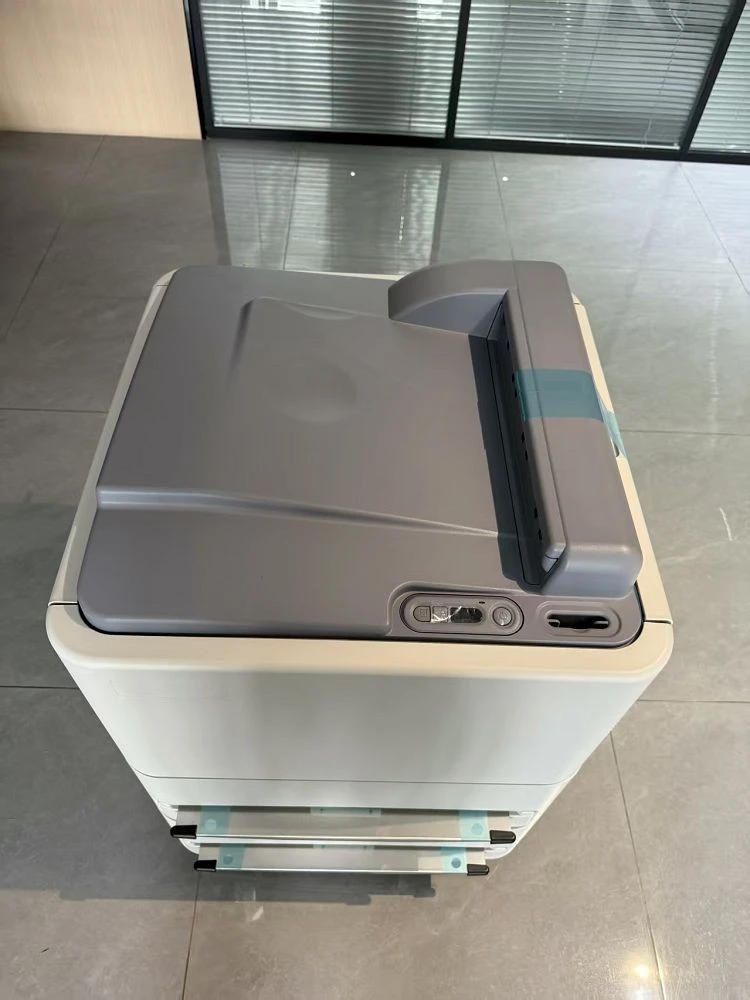
Dry laser printers, such as those you can learn more about at Dry Laser Printer, are a popular choice in many medical facilities. These printers use a dry imaging process, which eliminates the need for liquid chemicals in the development stage. Instead, they use heat and pressure to develop the image on the printing medium.
Dry laser printers offer several advantages. They are more environmentally friendly as they do not produce chemical waste. They are also more convenient to use as they do not require the storage and handling of liquid chemicals. Additionally, dry laser printers have a faster turnaround time as the development process is quicker compared to traditional wet - chemical printers.
Medical Thermal Printers
Medical Thermal Printers are another type of medical printer. These printers use heat to transfer ink or dye onto the printing medium. They are often used for printing smaller medical images, such as those from point - of - care ultrasound devices or electrocardiogram (ECG) machines.
Medical thermal printers are known for their simplicity and reliability. They are relatively inexpensive and easy to maintain. However, they may not offer the same level of image quality as laser printers, especially for high - resolution medical images.
Medical Thermal Imagers
Medical Thermal Imagers are specialized devices that use thermal technology to produce images. They detect the infrared radiation emitted by the body and convert it into a visual image. These images can be used to detect changes in body temperature, which can be an indicator of various medical conditions.
Medical thermal imagers are often used in conjunction with other medical imaging devices. They can provide valuable complementary information that can help in the diagnosis and treatment of patients.
Benefits of Medical Laser Printers in the Medical Field
Medical laser printers offer several significant benefits in the medical field.
High - Quality Images
One of the most important advantages of medical laser printers is their ability to produce high - quality images. The precise laser exposure and advanced image processing algorithms ensure that the printed images accurately represent the original digital data. This is crucial for medical diagnosis, as doctors rely on clear and detailed images to identify diseases and plan treatment strategies.
Compatibility
Medical laser printers are designed to be compatible with a wide range of medical imaging devices and systems. They support the DICOM standard, which allows for seamless integration with other medical equipment. This compatibility ensures that medical facilities can easily incorporate laser printers into their existing imaging workflows without significant disruptions.
Durability
The printed images produced by medical laser printers are highly durable. The use of high - quality photographic film or paper and the proper development process result in images that can be stored for long periods without significant degradation. This is important for maintaining patient records and for future reference.
Conclusion
Medical laser printers are complex and sophisticated devices that play a vital role in the medical field. Their ability to produce high - quality, accurate, and durable images from digital medical data is essential for medical diagnosis and treatment. As a supplier of Medical Laser Printers, we are committed to providing our customers with the latest and most advanced technology in this field.
If you are interested in learning more about our Medical Laser Printers or are considering a purchase for your medical facility, we encourage you to contact us for a detailed discussion. Our team of experts is ready to assist you in choosing the right printer for your specific needs and to provide you with the best possible support and service.
References
- Bushberg, J. T., Seibert, J. A., Leidholdt, E. M., & Boone, J. M. (2012). The essential physics of medical imaging. Lippincott Williams & Wilkins.
- Fauber, J. P. (2006). Photographic and imaging materials: history, chemistry, and applications. SPIE Press.
- Carlton, R. W., & Adler, J. R. (2006). Medical imaging physics. Wiley - Liss.